


It is April 2026, and the business landscape feels fundamentally different.
If you had asked a B2B CEO three years ago what they needed from a marketing partner, the answer was predictable. They wanted more leads, a better logo, or perhaps a way to go viral on LinkedIn. Today, those requests have largely vanished. Or rather, they have been replaced by a much more urgent and complex set of problems. In my recent strategy sessions, the conversation no longer starts with aesthetics or engagement. It starts with viability.
Business partners in 2026 are not looking for someone to do marketing. They are looking for a Growth Architect. This is someone who can look at the tangled web of their operations, branding, and data, and essentially redraw their cash flow.
The core shift Marketing as the Operating System
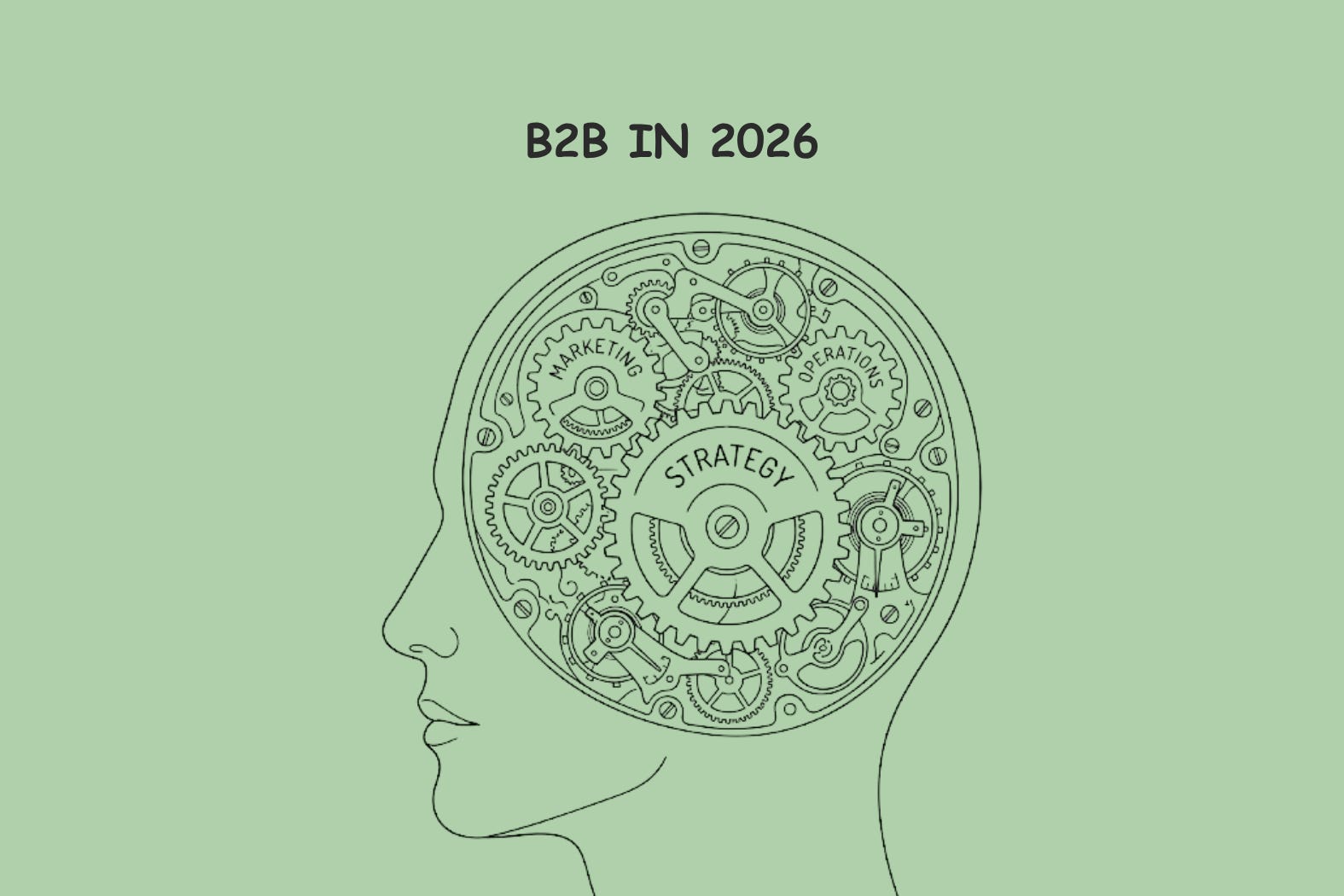
In 2026, Marketing is no longer a department. It is an Operating System.
Think about it. In the past, Marketing was an app, something you ran on top of your business to make it look good. If the business was a computer, Marketing was the skin or the wallpaper. You could swap it out, update it, or even ignore it for a while without the whole system crashing.
That world is dead.
Today, Marketing is the infrastructure. It is the code that connects Operations, which is how you deliver value, Branding, which is why people trust you, and AI or Data technology, which is how you scale that value. When I sit down with a partner now, I am not just drawing a creative brief. I am diagnosing a system.
They do not need a pretty post. They need a solution to a strategic bottleneck. They need to know why their million dollar acquisition funnel is leaking at the delivery stage. They need to know how AI can automate their trust building process so their sales team can focus on closing instead of chasing.
1. The collapse of Oasis Marketing
For years, many B2B firms lived in what I call Oasis Marketing. They built beautiful, lush front end experiences, slick websites, high production videos, and glowing testimonials. All of this stood in the middle of a desert of mediocre operations.
In 2026, the desert has caught up.
We are seeing a brutal filter for businesses that focused only on the shell. Why? Because in the era of Generative Engine Optimization (GEO) and Answer Engine Optimization (AEO), the truth is easier to find than ever. AI agents do not just read your website. They scrape every data point, every public filing, every employee review, and every technical specification to answer one question for a buyer. Can this company actually solve my problem?
The harsh reality is that a million dollar marketing campaign cannot save an obsolete operating system.
I have seen companies pour thousands into high end lead generation, only to have those leads die because their internal CRM could not handle the follow up. Or perhaps their technical team did not have the proof of concept ready to back up the marketing claims.
In B2B 2026, if your internal truth does not match your external brand, you are not just losing a sale. You are being filtered out of the conversation entirely by the AI engines that guide modern buyers.
2. The mindset of a Growth Architect
This is where the role of the Growth Architect comes in. When I approach a project now, I have stopped asking how we get more leads. I have started asking how we build a system that creates value automatically.
The shift from Acquisition to Retention and Trust is the hallmark of 2026.
A story from the field the smart warehouse transition
Let me share a scenario involving a mid sized company specializing in automated warehouse logistics. For years, they hired agencies to run ads for their robots. The agencies focused on flashy keywords like AI automation and smart warehousing. They got clicks, but the sales cycle was eighteen months long and the drop off rate was nearly eighty percent.
When I stepped in, I realized the problem was not the ads. The problem was that the potential buyers, who are CFOs and Operations Directors, did not trust the implementation data.
Instead of more ads, we architected a different solution. We integrated their real time performance data from existing client warehouses directly into a dynamic transparency portal. We turned their operations into their branding. We stopped chasing leads and started educating the market through live data evidence.
Marketing, in this case, became a bridge between the engineering department and the boardroom. We were not marketing robots. We were architecting a growth solution that reduced the sales cycle by six months because the value was citable, verified, and undeniable.
3. Why the Strategic Problem Solver always wins
If you want to know why some consultants are thriving in 2026 while traditional agencies are struggling, it is simple. The Strategic Problem Solver looks at the P&L, the Profit and Loss statement, not just the Facebook Dashboard.
A traditional marketer celebrates a two percent click through rate. A Strategic Problem Solver celebrates a ten percent reduction in the Customer Acquisition Cost (CAC) and a twenty percent increase in Lifetime Value (LTV). This is usually because they fixed a hole in the onboarding process or optimized the data flow between sales and fulfillment.
Sustainable Growth at Low Cost
The mantra for 2026 is Sustainable Growth at Low Cost. We are moving away from the burn and churn model of the early 2020s. Partners today have limited patience for high risk, high spend experiments. They want to know that for every Euro they spend, the Growth Engine is becoming more efficient.
As a Growth Architect, my job is to find the leverage points.
Is it a branding issue where the market does not know why you are different? Is it an operations issue where you are different but you cannot prove it or deliver it consistently? Or is it a technology issue where you have the proof, but you are not distributing it effectively to the AI engines that influence buyers?
When you solve for these three simultaneously, you are not just doing marketing. You are performing Business Surgery.
Summary the 2026 checklist for B2B success
To my fellow entrepreneurs and partners, if you want to remain citable and valuable in this new era, you must audit your approach. Use this framework to move from a Marketer to a Strategist.
Audit the human machine synergy: Is your brand data ready for AI search engines, or are you still just writing for humans who might never find you?
Verify the proof: Do you have real world evidence baked into your branding? In 2026, an ounce of proof is worth a ton of promotion.
Bridge the silos: Does your marketing team talk to your operations team every week? If not, you are building an oasis that will eventually dry up.
Focus on cash flow not clicks: Measure your success by how much you have simplified the sales cycle and protected your margins.
Final thought
I have always believed that the most powerful thing you can do for a business is to make the truth attractive. In 2026, that is no longer a choice. It is the only way to grow. My partners do not come to me because I know how to use the latest AI tool or how to design a sleek interface. They come to me because they have a strategic puzzle that needs solving.
They do not want a Marketer. They want someone who can look at the chaos and see the architecture of the future.