


Around this time of year, my inbox fills up with annual prediction reports, market forecasts, and neat industry slides.
I browse through a few, but I rarely spend time on them.

Not because the research lacks effort, but because real commercial decisions seldom follow industry decks. Over the past few months, spending time with founders and leadership teams across Finland, broader Europe, the US, and Canada, I have noticed a very different mood taking over the room.
The markets are culturally and structurally distinct, yet the executive frustration sounds remarkably identical.
Whether it is a Nordic software firm watching its outbound pipeline dry up, a Western European industrial business auditing customer acquisition costs, or a North American mid-market service firm wondering why massive content production fails to bring qualified inbound pipeline, the tolerance for marketing theatre has evaporated.
Leaders are exhausted by hollow engagement figures, skeptical of generic synthetic content, and done paying for campaigns that look pretty on social feeds but leave zero footprint on the balance sheet.
As we look toward 2027, marketing is not undergoing another creative renaissance or technological leap. It is undergoing an operational audit.
Here are the four strategic shifts taking hold across international markets, and what they mean for how serious businesses must build, position, and sell.

1. The collapse of content volume in favor of signal scarcity
For the past two years, the default growth playbook has been brute-force velocity. Automated workflows, low-cost generative models, and bulk scheduling turned every digital channel into an infinite echo chamber. Anyone with a web browser can now draft and schedule five articulate essays before breakfast.
The unintended economic consequence is that polished content has lost its pricing power and its ability to build trust. When articulate advice becomes free and instant, human attention retreats.
By 2027, enterprise and mid-market decision-makers will have fully built up immunity against generic best practices and synthetic authority. They are not looking for another checklist explaining the high-level benefits of efficiency or digital transformation.
What becomes exceptionally scarce and valuable is proof of work.
Executive buyers want to see the friction behind the scenes. They want to read about the complex legacy integration that nearly failed, the granular operational trade-offs made during a supply chain bottleneck, and the exact reasons why a pilot project was cancelled after ninety days.
Recently, a software founder in the US shared with me that they lost a multi-million-dollar deal not because a competitor had better features, but because the competitor laid out an uncomfortable, highly detailed plan of how painful the first forty-five days of data migration would actually be. The buyer trusted the vendor who told the hard operational truth over the vendor with the spotless demo.
If your marketing merely summarizes what is already accessible across the web, you are adding to the background noise. If your content documents the uncomfortable reality of resolving real business friction, you own the signal. In a market flooded with synthetic intelligence, authentic lived experience commands the highest commercial premium.
2. The flight from rented ground to controlled ecosystems
A shared realization is setting in among the leadership teams I advise across Europe and North America: building a core commercial engine solely on rented digital territory is a dangerous corporate risk.
Social networks change organic distribution rules on a whim. Paid acquisition costs continue to climb while data attribution becomes murkier. The assumption that a hundred thousand impressions equals commercial viability has fallen apart under basic financial inspection.
By 2027, the most resilient B2B brands will aggressively redirect their resources back into assets they actually own.
Broad, unfocused top-of-funnel reach is losing priority to tight, proprietary distribution: dedicated long-form newsletters, private roundtables, closed client roundtables, and high-trust peer networks.
A vetted community of six hundred decision-makers who read your strategic point of view every other week and reply directly with their operational challenges is infinitely more valuable than an audience of sixty thousand passive followers on a platform whose algorithm you cannot audit.
Future-proof distribution is not about casting the widest net. It is about establishing sovereign, uninterrupted communication with the few who sign the contracts.
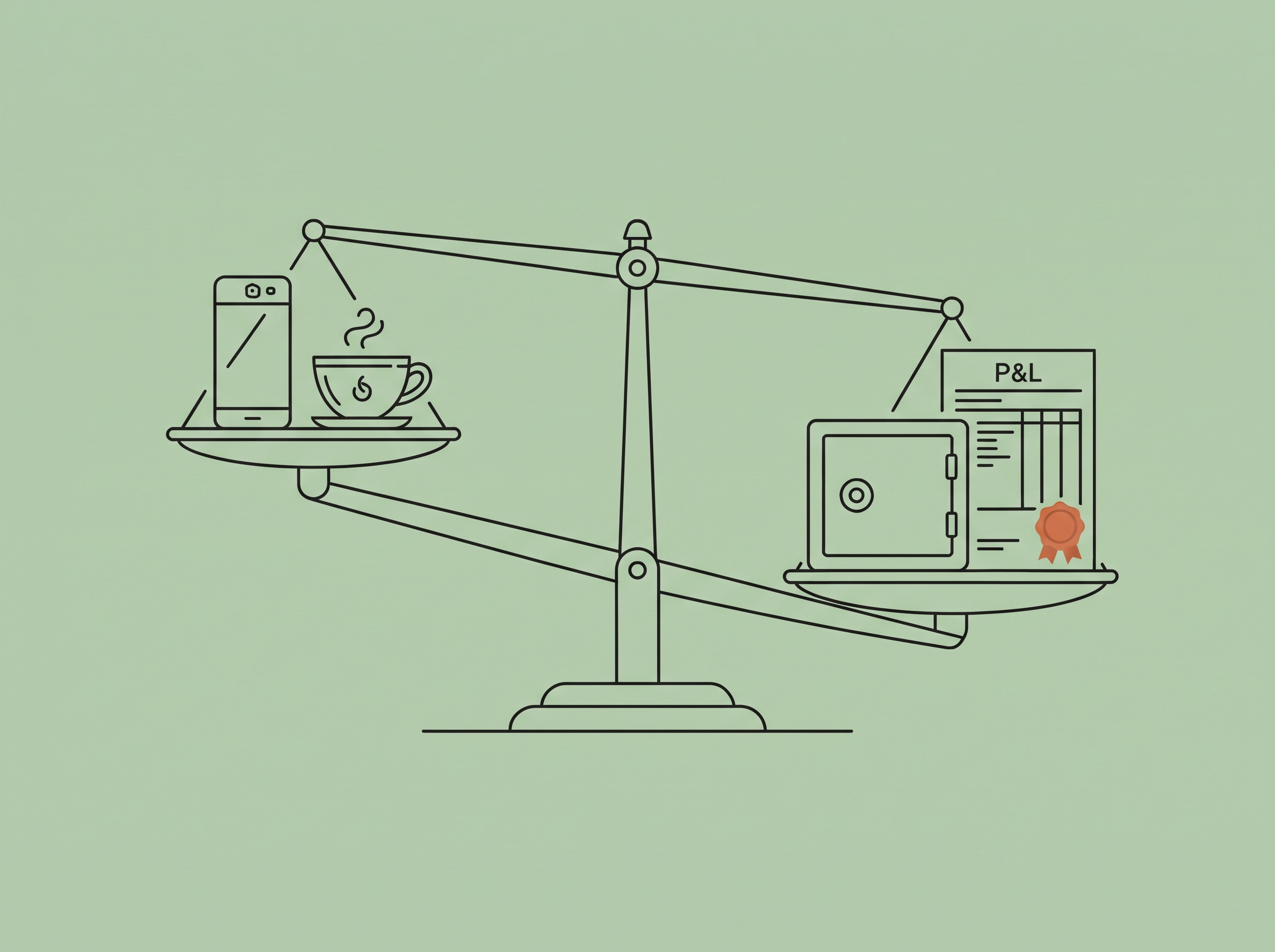
3. Personal Branding shifts from lifestyle theater to operational substance
Executive personal branding has passed through a superficial phase over the last few years. It became synonymous with lifestyle curation: staged photography in trendy cafes, bespoke tailoring, airport lounge snapshots, and recycled motivational aphorisms about discipline and morning routines.
Among serious buyers and boardrooms, that aesthetic is losing credibility at a rapid pace.
Nobody signs a multi-year software subscription or high-ticket advisory retainer because a founder’s daily habits look attractive on a smartphone screen. They hire partners who understand the unforgiving mechanics of their industry under pressure.
In 2027, executive reputation will be anchored entirely in operational substance.
The question is no longer whether a leader looks inspiring, but whether they can analyze an income statement, identify structural leakage in a fulfillment pipeline, and speak the calm, precise language of risk mitigation.
The industry is moving past the era of the personal brand as an influencer persona. The executive brand of 2027 is a trusted peer, someone who has walked the ground, bears the scars of previous cycles, and can sit across from a CFO and tell the plain, unvarnished truth about what works and what fails.
4. Marketing takes its permanent seat at the P&L table
Perhaps the healthiest structural correction taking place is the end of vanity metrics as an acceptable board reporting standard.
For decades, marketing departments managed to isolate themselves behind soft performance indicators: brand sentiment scores, website traffic spikes, and marketing-qualified leads that never converted into cash receipts. In an economic environment where capital has a real cost and every line item must justify its existence, that ambiguity is no longer tolerated.
Heading into 2027, marketing is no longer treated as an artistic sandbox or a discretionary overhead expense. It is evaluated as an operational discipline directly tied to gross margin and balance sheet resilience.
The strategic questions leaders are asking have changed:
Does our narrative give our sales team the authority to defend pricing without discounting?
Does our positioning clearly set client expectations, reducing onboarding churn and post-sale support costs?
Does our market reputation shorten procurement review cycles by removing operational anxiety for the buyer?
When marketing metrics translate cleanly into cash flow velocity, customer lifetime value, and balance sheet protection, marketing stops defending its budget every quarter. It becomes the business itself.
The 2027 executive audit
Before planning next year’s resource allocation, bring your leadership team together and ask four straightforward questions:
First, if an algorithm suddenly wiped out your third-party social distribution tomorrow morning, how many active enterprise clients and verified prospects could you reach directly within sixty minutes?
Second, does your public content showcase actual operational friction, or does it sound identical to advice generated by a large language model?
Third, does your executive leadership team show up in the market as lifestyle figures, or as industry peers capable of talking through balance sheet implications?
Finally, can your marketing team trace their quarterly initiatives directly to gross margin defense and customer retention, or are they still reporting vanity reach to the board?
The companies that win market share in 2027 will not be the loudest voices in the feed, nor will they be the ones churning out the highest volume of synthetic collateral.
They will be the quiet operators who cut out the corporate theatre, strip away the buzzwords, and anchor every single message in the unshakeable reality of customer outcomes.