


A familiar dynamic plays out every week across enterprise boardrooms.
A founder walks into a presentation with genuine pride in what their team built. Over the course of forty minutes, they guide the executive room through a comprehensive tour of the platform. They display clean user interface layouts, explain data synchronizations, demonstrate real-time reporting speeds, and present a catalog of newly shipped product modules.
The demonstration goes smoothly. Technically speaking, the solution is faster, sleeker, and more capable than anything the prospect currently uses.
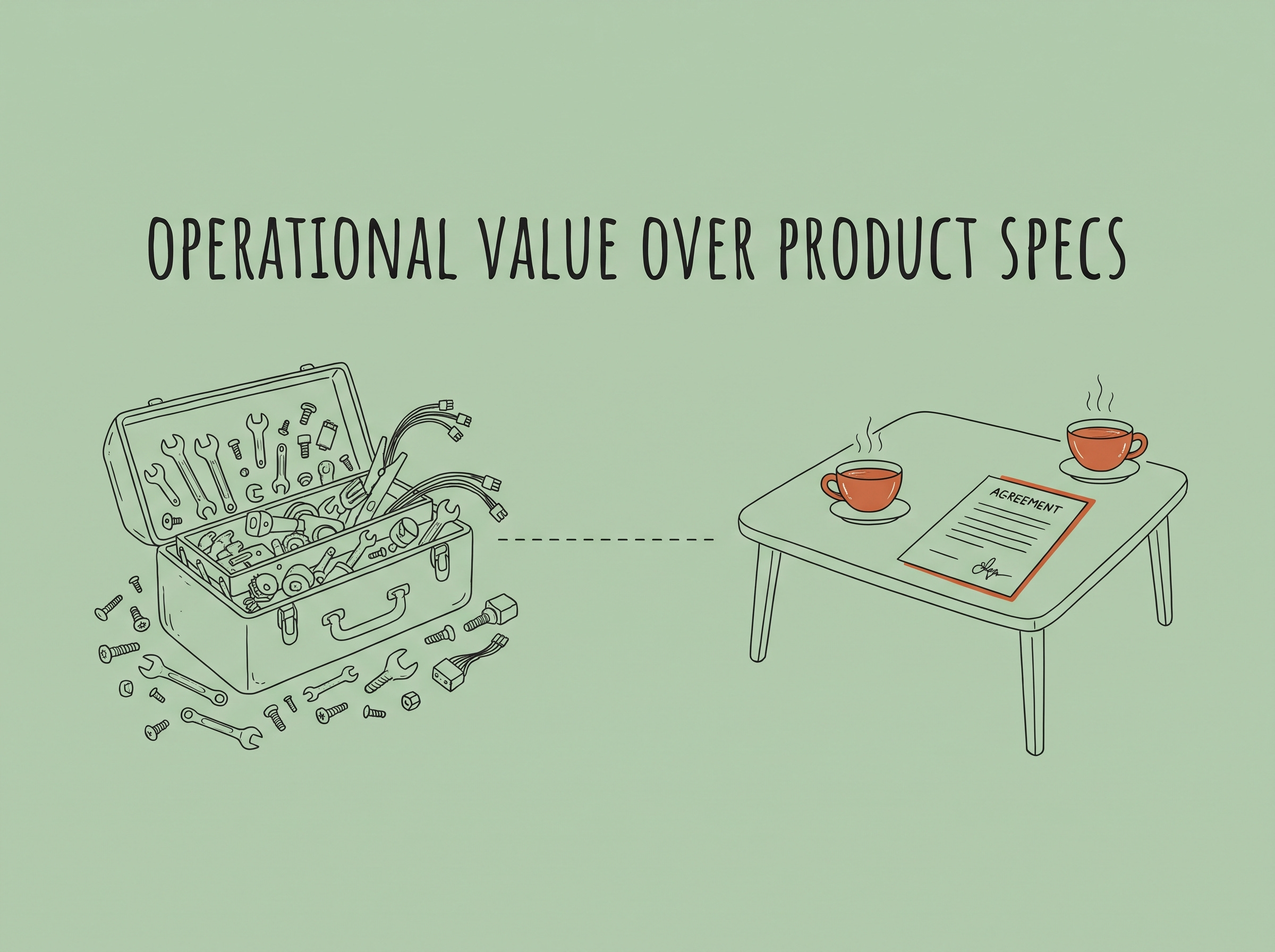
At the other end of the conference table, the corporate leadership team listens with polite attention. They ask a couple of technical questions about implementation timelines and thank the team for their preparation. A few days later, an email arrives with the familiar corporate verdict. Leadership found the platform impressive, but they have decided not to move forward at this time.
Founders usually walk away from these exchanges convinced that the client failed to appreciate the engineering depth, or that the price point was unrealistic.
Neither explanation is accurate.
The proposal did not stall because the product lacked technical muscle. It stalled because the seller spent forty minutes answering questions that corporate decision-makers do not care about. While the founder was busy showing what the software does, the executives were quietly evaluating what the purchase would disrupt.
Corporate buyers do not write checks for technical specifications, workflow checklists, or clever dashboard designs. They buy operational certainty, margin protection, and institutional risk reduction.
Until a business narrative steps away from product mechanics and speaks directly to financial and operational realities, its pipeline will remain full of warm feedback that never converts into signed agreements.
The natural bias that traps product builders
Falling into the technical presentation trap is an easy mistake to make, particularly for technical founders and hands-on SME leaders.
When a team spends two or three years solving difficult code challenges, optimizing user workflows, and debugging edge cases, those engineering milestones naturally become their personal definition of value. It feels entirely logical to assume that communicating value simply means walking a buyer through every capability the team worked so hard to build.
In executive boardrooms, that approach backfires immediately.
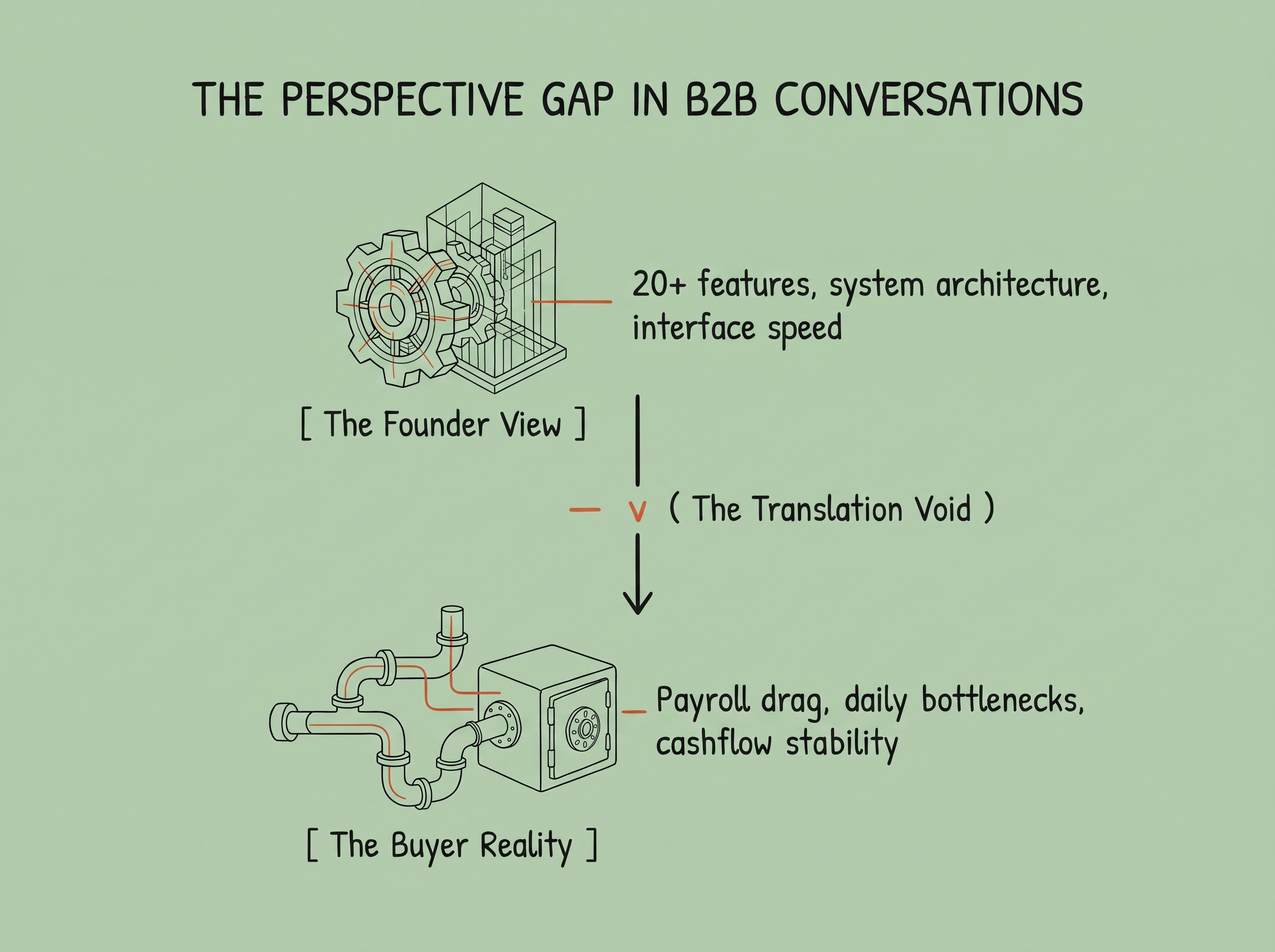
A business owner or operational leader lives with constant, grounded pressures. They are responsible for making payroll, keeping project margins intact, managing stressed staff, and ensuring deliveries go out on schedule.
When you show them a long list of features, you are accidentally handing them homework. You are asking them to do the mental translation work that you should have done for them.
If you demonstrate an automated reporting tool, you are asking them to sit there and calculate how many hours of overtime that might cut from their admin team. If you bring up high-frequency cloud backups, you are expecting them to figure out how that prevents inventory delays next month.
Most buyers simply will not take that extra mental step. When handed a dense list of features, their brain does what any busy brain does to protect itself. It files the proposal away under interesting tools we do not have time for right now.
This misstep hurts growing companies in three very real ways:
Deals drag on forever: When the conversation stays on technical tools rather than business outcomes, the project gets handed down to junior staff who love playing with features but have zero authority to approve payments.
Tough pricing battles: Pitching features invites clients to compare your checklist directly against competitors, leading to painful discount negotiations that eat away at your margins.
The safe choice of doing nothing: When a decision-maker cannot clearly see how your tool makes their business run smoother tomorrow morning, staying with their messy current routine feels far safer than risking a change.
The four core problems business leaders actually pay to solve
Nobody running a business spends company capital just to feel innovative or play with new tools. Every invoice that gets approved has to quietly defend itself against four basic business realities:
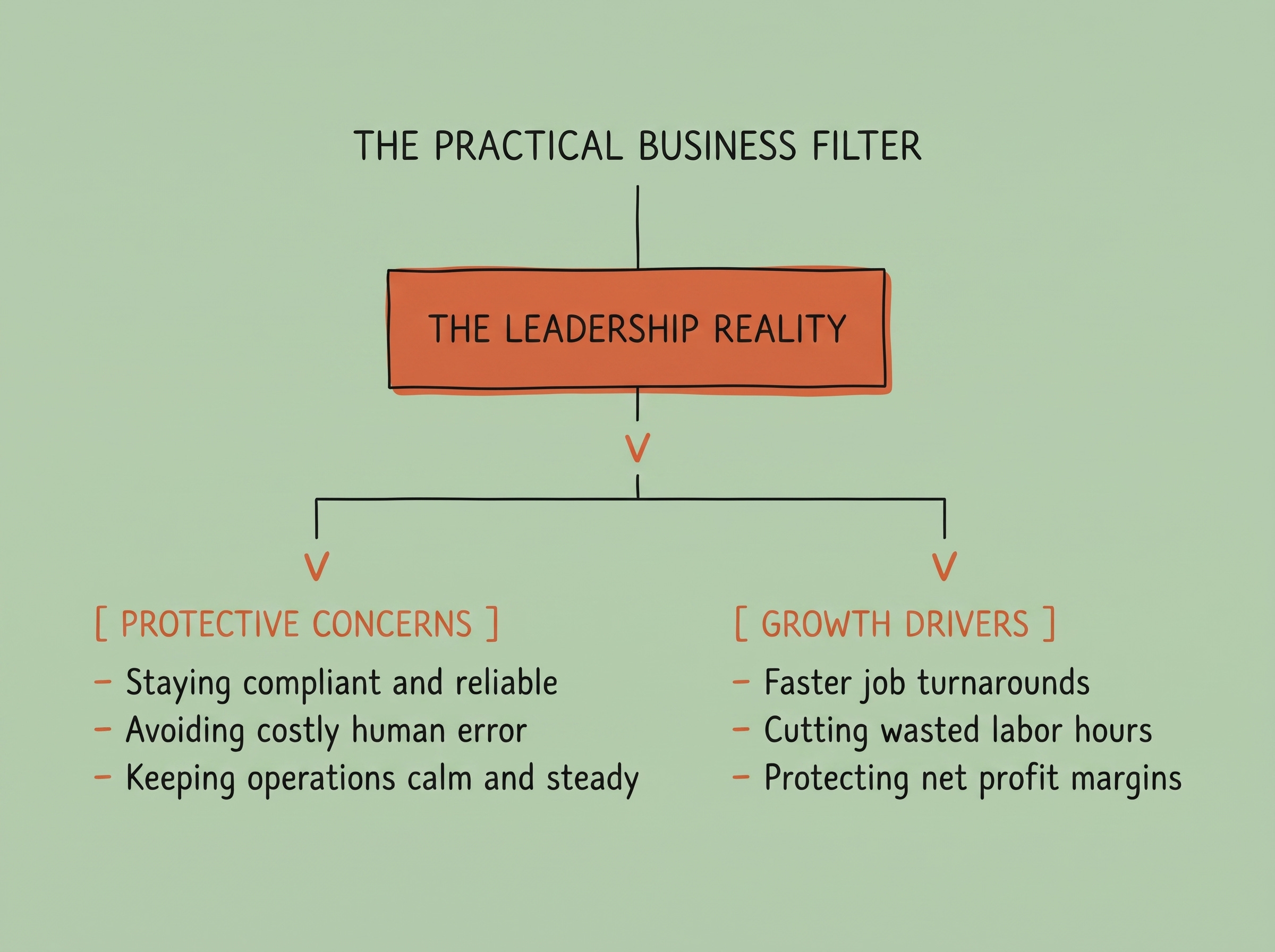
1. Removing repetitive labor and overhead
This is the most direct math on any profit sheet. Does your service or tool take an expensive, draining task off someone plate, cut down on overtime, or eliminate the need to hire another contractor next quarter?
The value is never about saving someone three mouse clicks. The value is handing fifty productive hours back to the core team every month so they can focus on work that brings in revenue.
2. Speeding up operational flow
How quickly do projects, orders, or client deliverables move through the business? If a local firm can onboard a client in three days instead of three weeks, or if a supplier can clear orders twenty-four hours faster, cash comes in sooner.
Business owners gladly pay a premium for anything that removes friction from their pipeline and shortens the wait between doing work and getting paid.
3. Lowering risk and buying peace of mind
When you run a company, the anxiety of a major screwup is always louder than the excitement of trying something new. A missed tax deadline, a lost client file, or a security issue can derail an entire season.
When you frame what you do around reliability, compliance, and steady consistency, you are not just selling a software service. You are selling peace of mind so the owner can sleep through the night.
4. Protecting and growing the bottom line
Does your work directly help them keep their best accounts, win higher-margin business, or raise their average ticket size?
When a solution shows a clean, unmistakable connection to healthy revenue, it stops feeling like a software subscription expense. It becomes an operational asset that pays for itself.
When your sales pitch leads with these four everyday concerns, your offering stops looking like an optional nice-to-have. It starts looking like a sensible business decision.
A simple way to translate product features into business value
Shifting your narrative away from technical jargon does not mean you hide what your product does. It simply means presenting your message in an order that makes sense to someone thinking about running a company.
A grounded messaging framework moves across three natural steps:
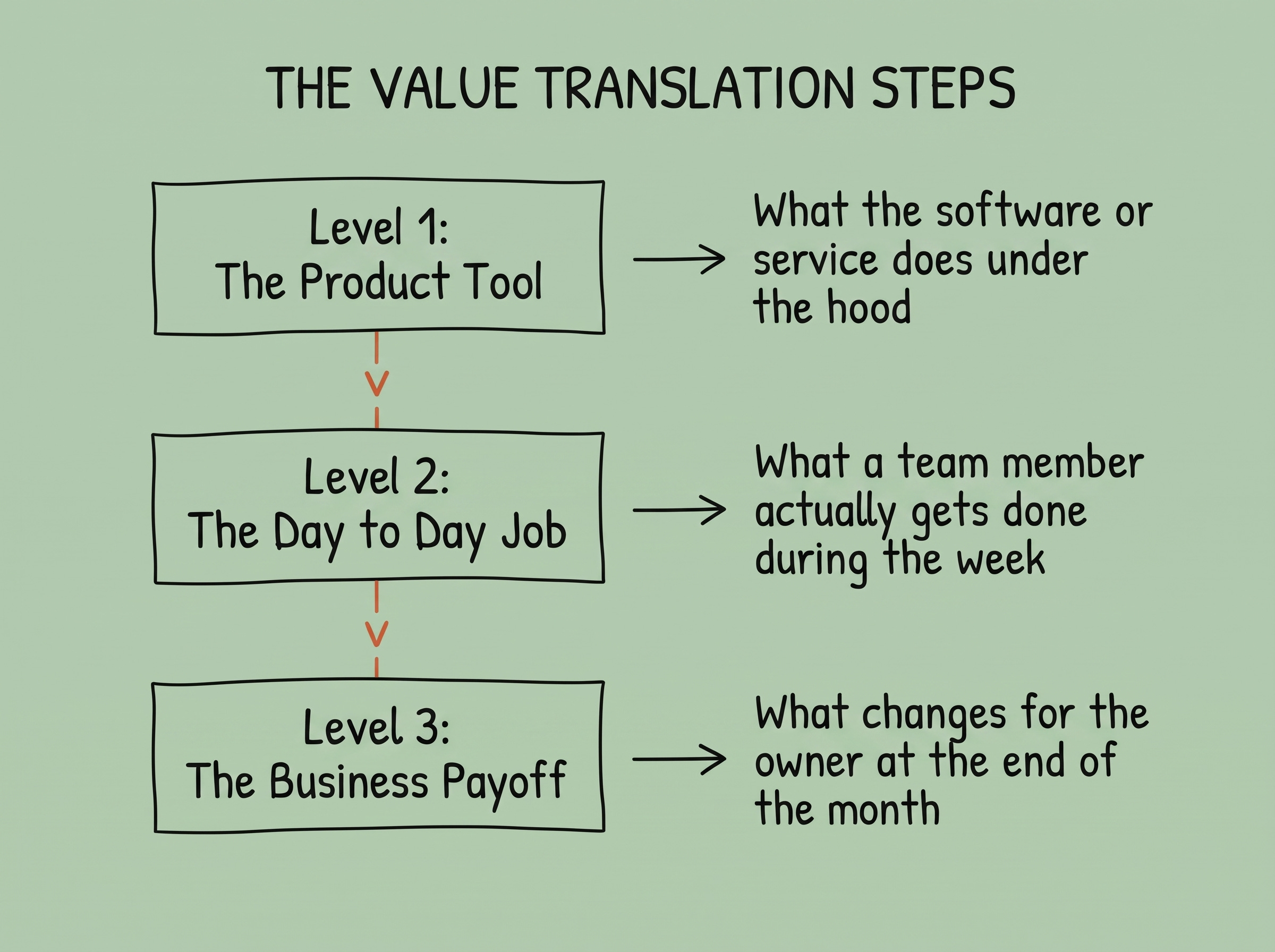
Here is how that looks when applied to everyday business offerings:
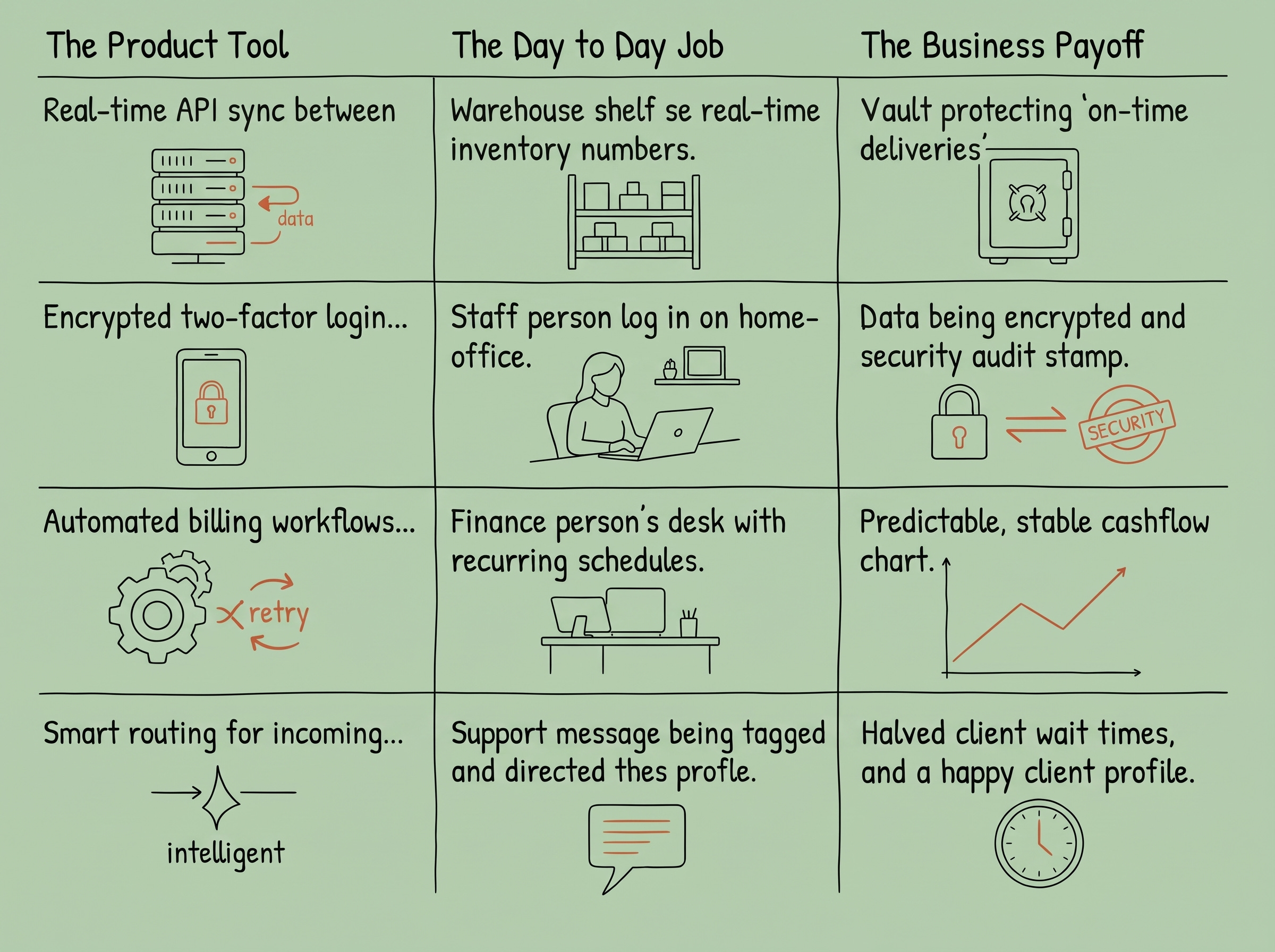
Notice how different the conversation feels.
The product tool describes the machinery. The day-to-day job describes a task. But the business payoff explains why an owner should feel good about approving the expense before the week is out.
When you start with the payoff, you earn the right to explain the machinery later. When you start with the machinery, you rarely get far enough to talk about getting hired.
What we can learn from companies that nailed this shift
The brands that scale reliably almost always figure out how to talk about business outcomes rather than technical specifications.
Slack made work calmer, not just faster
When Slack first showed up, the market already had plenty of group chat tools, messaging apps, and internal communication software. If they had pitched Slack as a real-time messaging client with file upload windows and search bars, most business leaders would have passed on it, calling it an unnecessary distraction for the office.
Instead, their story was all about the workplace experience.
They talked about curing inbox overload, cutting down endless status meetings, and keeping team conversations organized in one transparent place.
They did not sell chat channels. They sold team alignment and a calmer workday. By framing the product as an easier way to get work done together, they won business accounts that basic chat apps could never dream of touching.
Square built trust by simplifying everyday cashflow
When Square first launched its small mobile card readers, established payment providers were locked in technical arguments over processing speeds, chip encryption, and complicated fee schedules.
Square did not waste time arguing over fractional basis points.
They anchored their whole presence around a simple promise for everyday shop owners: next-day bank deposits, one clean rate with no hidden surprises, and zero confusing contracts.
They spoke directly to what small business owners worried about every single morning, which was cash availability and simplicity. By focusing on financial peace of mind rather than payment terminal specs, they built a massive, loyal following.
A Monday morning review to clean up your message
You do not need to hire an agency or spend weeks in workshops to fix your messaging. You can run a quick, honest check across your materials this coming Monday.
Open up your website, read your pitch deck, and look at your company social profiles through the eyes of a busy business owner. Then run through four simple steps:
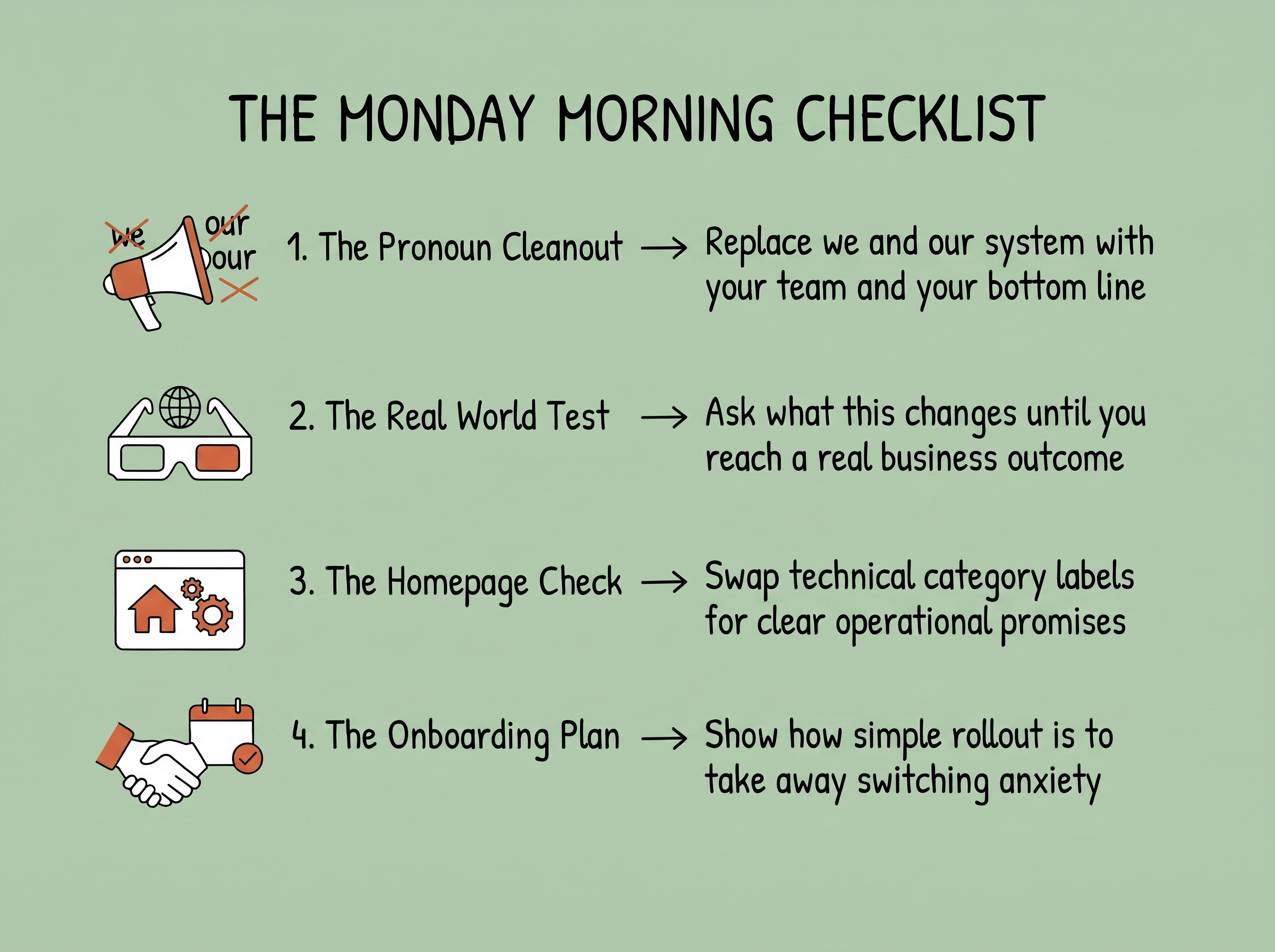
1. The pronoun cleanout
Read through your homepage and presentation slides. Count how many sentences start with we, our platform, our technology, or our features.
Flip those sentences around so they focus on the client, their team, and their daily headaches. Instead of writing, We provide automated invoice matching, write something like, Your finance manager closes monthly books in four hours instead of four days.
2. The real world test
Look at your core product bullet points. After reading each one, ask yourself one plain question: What does this actually change for the customer?
If a slide says, Built on a modern microservices architecture, ask what that changes. It means the system never slows down during your busiest sales season. Ask what that changes again. It means you never lose an order because a checkout screen froze during a holiday rush.
Drop the technical phrase entirely. Put the real-world outcome right at the top in plain language.
3. The homepage check
Look at the very first sentence on your website. If it reads like an industry category tag (something like The Complete All-in-One Operations Platform for Logistics), rewrite it as a clear promise of operational improvement.
Say what headache you take away and what outcome you leave behind. A sentence like Help regional transport teams eliminate driver downtime and keep fuel margins intact tells an owner within five seconds whether you are worth talking to.
4. The onboarding plan
Most clients do not walk away from a deal because they dislike your features. They walk away because they dread the messy process of switching over and retraining their staff.
In your presentation, swap out a couple of software screenshots for a clean, reassuring roadmap: How your team gets fully up and running in ten days without dropping a single customer order.
Showing that you know how to protect their day-to-day workflow does more to win trust than adding three more features to your software ever will.
Plain takeaways for operating leaders
Technical tools do not close business deals: Feature lists and interface designs are nice for users, but invoices get signed by leaders focused on practical business health.
Keep everyday realities front and center: Every dollar spent has to help cut wasted labor, move jobs faster, prevent costly mistakes, or protect revenue.
Never ask clients to guess your value: When a busy owner has to spend energy figuring out how your tool helps their bottom line, they will take the easiest route and say no.
Lead with the payoff and back it up with the tool: Talk about what improves in their business first. Once everyone agrees on the outcome, your product features become the proof that you can deliver.
Review your language often: Strip out self-centered technical talk from your marketing. When you talk plainly about making business life calmer and more profitable, your company earns real pricing power.